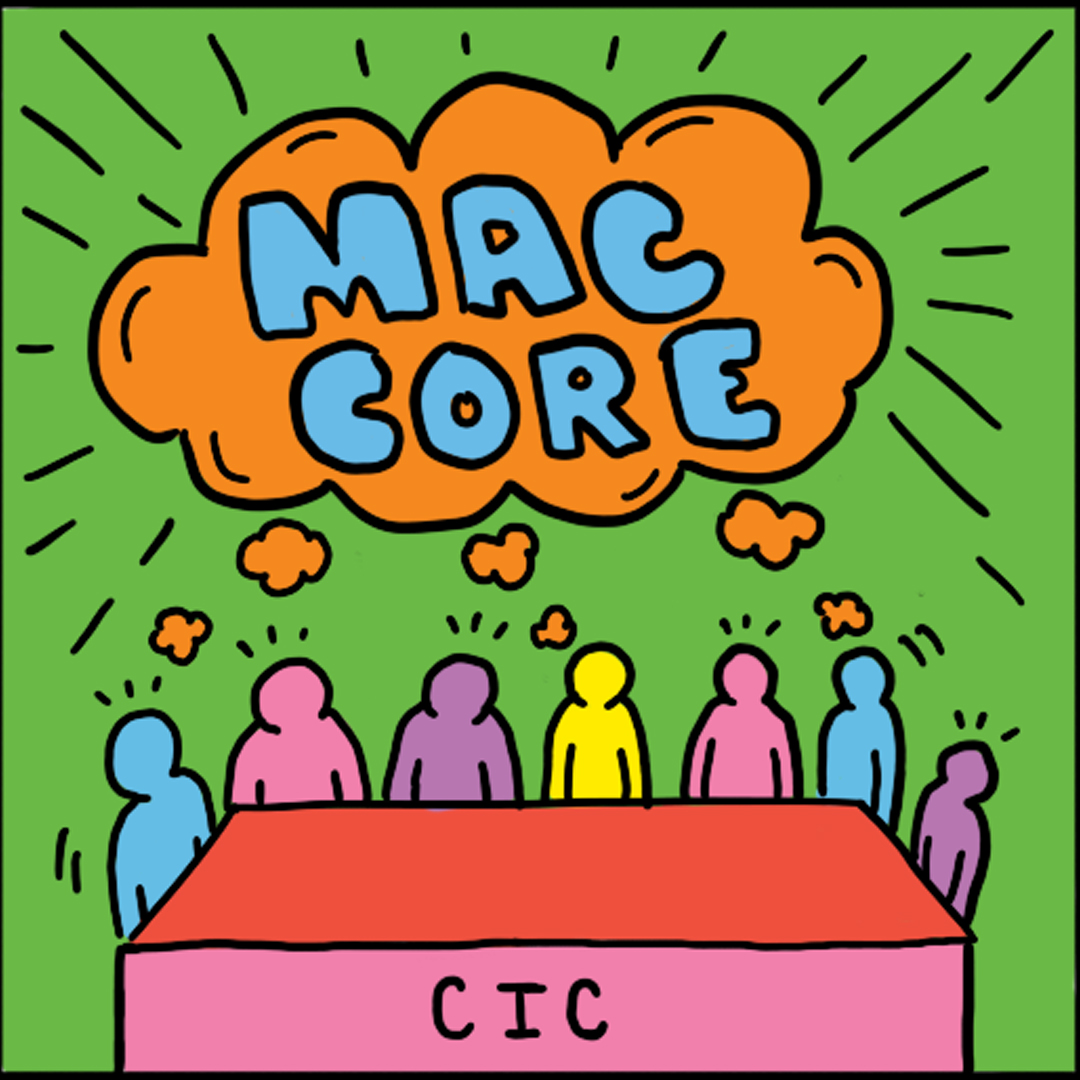
On Feb. 10 of this year, faculty approved the first comprehensive update to the college’s curriculum since 1981. In June 2024, Macalester’s newly elected Curriculum Implementation Committee (CIC) met for the first time. The changes to Macalester’s general education requirements, now referred to collectively as “Mac Core” aim to clarify the purpose of existing requirements, modernize their language and organization and add a new applied learning component required for future generations of Macalester students.
The changes were influenced in part by Macalester’s most recent strategic plan: “Imagine, Macalester,” which calls for a more developmental four-year academic experience. CIC members viewed the redesign as an opportunity to align graduation requirements more explicitly with the college’s mission and student learning goals.
A nearly two-year process preceded last month’s vote, during which the committee gathered input from the people most impacted by the curriculum on a daily basis: faculty, staff and students. From 2024 to 2026, CIC hosted 38 engagement events and consulted 2,353 participants, working through 4,816 open-ended comments and collecting 8,068 data points.
“The committee saw its job as facilitating a process rather than creating a new curriculum,” Beth Severy-Hoven, co-chair of the CIC and Classical Mediterranean and Middle East professor, wrote in an email to The Mac Weekly. “The Mac Core presents the best thinking about the curriculum of a very large group of people.”
What the CIC found, according to Severy-Hoven, was that most of the Macalester community was satisfied with the requirements and curriculum as they have been for the past forty years. The problem, she said, lay in a lack of a “shared vocabulary” to talk about them.
“[The general education requirements] have titles and descriptions that don’t help communicate their purposes, and as a result students and advisors tend to think of them as boxes to be checked rather than meaningful academic experiences,” Severy- Hoven wrote. As a result, many of the changes are in names and categorization. “Our goal was to make the connection to our mission clear by using more straightforward language.” For example, the requirement that students take classes in arts, humanities and quantitative thinking remains unchanged in substance, but it is now called “ways of thinking and doing,” instead of simply “distribution requirements.”
Not all of the changes are in name only. The new curriculum also includes additions, like the new “Engage” requirement that expects students to complete at least one applied learning experience, such as study away or an internship. According to CIC Co-Chair and Geography Professor Dan Trudeau, the requirement “is intended to enable students to gain insight into the ethical dimensions of their work.”
Another one of the more significant changes involves a mainstay of every student’s Macalester experience: the first year course (FYC). Those conversations were some of the most difficult, according to Severy-Hoven, because many professors are deeply invested in the FYCs they teach; these classes also fulfill vital orientational purposes for students entering college for the first time.
The CIC opted to rename FYCs as “Foundations” courses. Most of the new material, Severy Hoven wrote, is intended to ensure there is content “focused on facilitating the transition to college, introducing the liberal arts framework, and helping students develop foundational research and writing skills” built into the course, while unique subject matter is retained.
“The institution needs to have a mechanism through which we guarantee that every student has learned about all that is available to them and expected of them at Macalester,” Severy-Hoven continued.
Although faculty have approved the framework of the Mac Core, significant implementation work remains. CIC is currently halfway through its three-year term and will now turn its focus towards developing the infrastructure necessary to support the new requirements. This includes establishing systems to track student progress, reviewing and approving courses under the new designations and offering professional development opportunities for faculty and staff advisors.
According to Severy-Hoven, the new curriculum will not affect students currently enrolled at Macalester or those entering next fall.
“With the new Mac Core approved, there remains a lot of work to do in setting up systems to track student progress through it; develop and approve courses that students can take to fulfill its requirements; and offer professional development to faculty and staff advisors so that we can all speak clearly to the goals and purposes of the Mac Core when we work with students,” Severy-Hoven wrote.
Additional student learning outcomes tied to the college’s mission will also move forward for consideration by the Board of Trustees later this year. While the structural outline has been finalized, the coming semesters will focus on ensuring that the Mac Core can be implemented smoothly and communicated clearly to both current and prospective students.