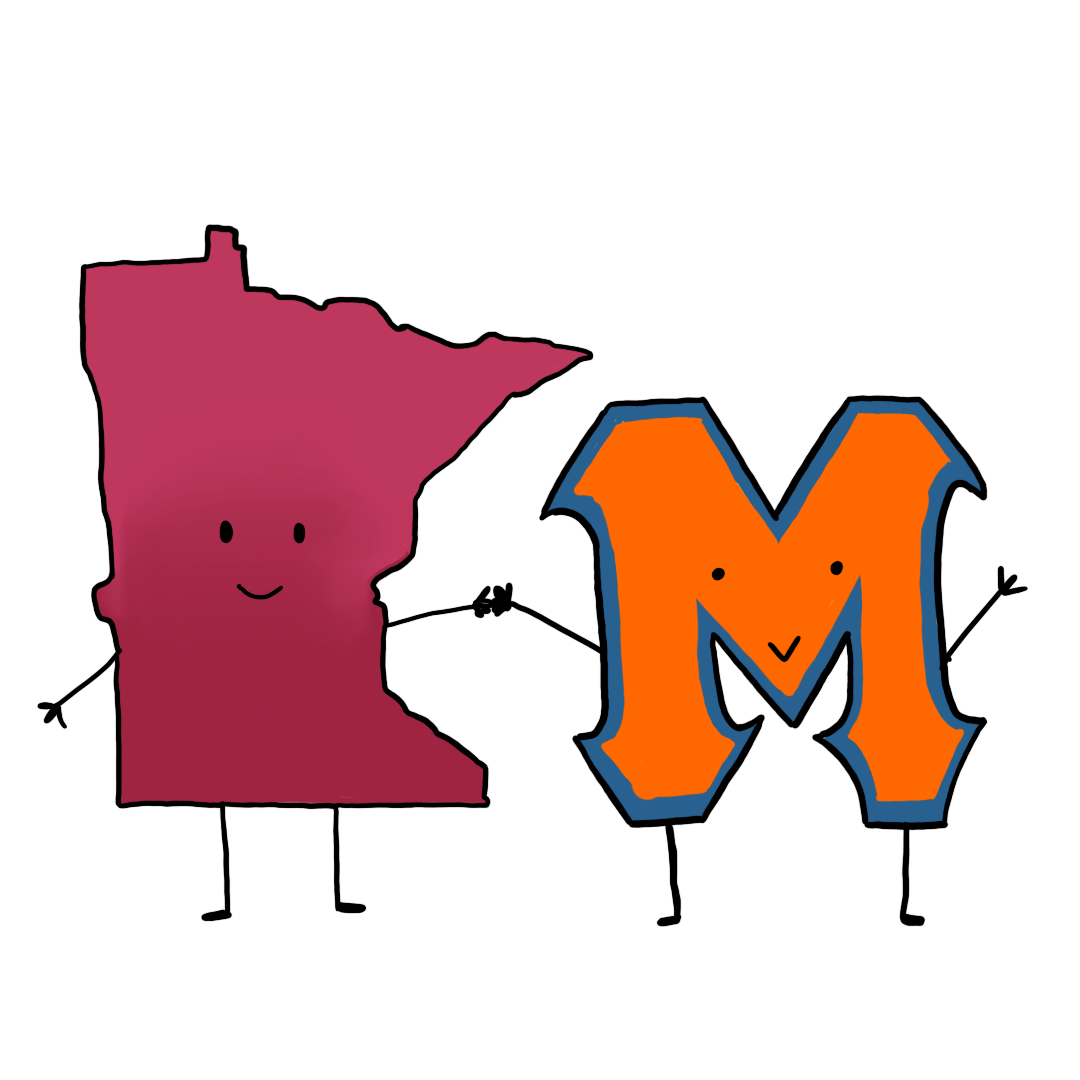
On Feb. 12, White House border czar Tom Homan announced that Immigration and Customs Enforcement (ICE) would be significantly reducing the number of agents deployed in Minnesota. This announcement came after weeks of relentless protest and organizing by activist coalitions and community members across the Minneapolis-Saint Paul metropolitan area. The Twin Cities are home to a vibrant local arts scene: according to the Minnesota State Arts Board, roughly 30,000 artists live in the region. Thus, it should come as no surprise that a major feature of the recent anti- ICE protests has been the widespread creation and dissemination of activist art, otherwise known as “movement art.”
This wave of anti-ICE artwork transcends the boundaries of a single mode of expression. It spans a variety of mediums, from printed flyers to protest signs to painted murals and even a Bruce Springsteen song. What unifies this work is a combination of anger towards the current administration and deep expressions of love for Minneapolis and the Minnesotan spirit.
This mindset includes artists within the Macalester community. History Professor Sage Greason combines his passion for history with graphic art in his role as Managing Partner for the Graphic History Collective (GHC) in his spare time. At the GHC, Greason works with graphic artists to create and produce visual and animated content related to advanced historical research.
In response to the federal actions in Minnesota, Greason and his company have gotten involved in the efforts to raise awareness and respond to ICE’s actions through graphic art.
“GHC has produced two mini-comics in response to the federal occupation of Minnesota,” Greason wrote in an email to The Mac Weekly. “‘Dearly Beloved’ focuses specifically on the murder of Renée Good and the context of state violence in Minnesota, using Prince’s classic song ‘Let’s Go Crazy’ as the primary theme. We also produced a tribute to Bad Bunny’s Super Bowl performance and the importance of Puerto Rican history and culture.”
For Greason, history shapes how he views art and influences his artwork. This includes history unfolding within the local community.
“The consistency of my work is the hallmark of these projects,” Greason wrote. “It combines the power of popular resistance against oppression with music and visual design to teach lessons that defend democracy across historical contexts.”
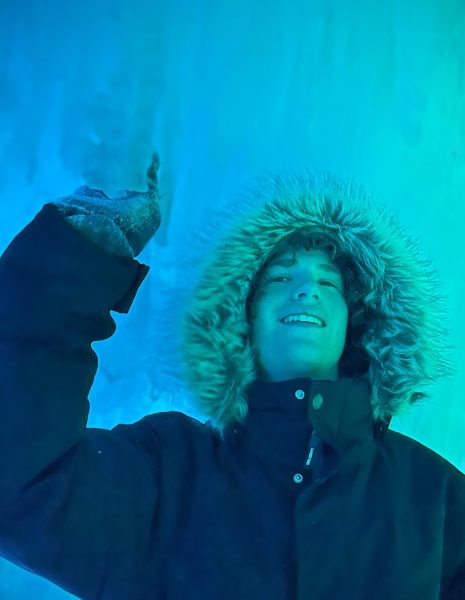
The project of supporting social justice with art has resonated with many artists on Macalester’s campus. Alex Walton, technical supervisor for Macalester’s art studio, uses sculpture to make statement pieces about current life in Minnesota. Walton works with a variety of materials, ranging from wood and metal all the way to snow. Walton sees sculpture as a means of healing and repair. He hopes that more people will use art-making to process feelings evoked by the ICE operation.
“It takes so many different avenues to express what people are going through,” said Walton. “All those voices will bring attention to things and media outlets. The public nature of making work is also a tool in the toolbox of creating change. Being creative right now and coming up with a creative, peaceful solution to express yourself, or to express your disdain for policy matters, is a great way to showcase that to the world.”
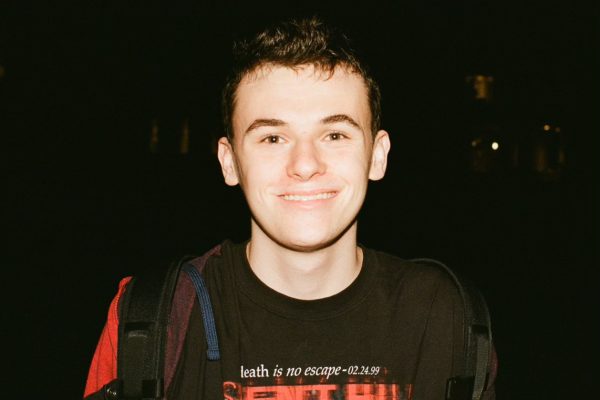
Conor Cusack and Halley Norman ’19 are two local artists responding to elevated ICE activity through their work. They’re both multimedia artists whose work has a heavy activist bend, and who primarily work in screen printing. Screen printing, which has deep roots in nineteenth-century Japan, is a versatile stencil-based technique for printing on a variety of surfaces, including paper and cloth. Screen printing is a relatively cheap and fast process, and it allows artists to make dozens of posters, banners or T-shirts in hours.
“[Screen printing] is not highly complicated art, but it’s really thoughtful and intentional, and it is still an opportunity for us to work with community members, to work with our friends … to try to make visible this new future that we want to move towards,” Cusack said.
Norman emphasized the importance of community involvement in activist artmaking.
“A lot of the art that goes into public spaces — it’s heavily financed by government entities, or corporate or nonprofit entities,” she said. “It can still be really beautiful, but it can change what story [gets] told.”
According to Norman, screen printing is an ideal medium for movement art because “you can do it on your own, but it’s always easier to do with a friend.” For her, screen printing is a powerful means of building community between friends and strangers alike.
“Part of the whole process is you get to learn to work with people that might not be the person that you chose to work with originally, because that’s just who’s around and that is a good challenge,” Norman said.
Cusack echoed this sentiment, adding: “Whether it’s the 10 people who have come together to paint a banner, or it’s the four people who are at the studio late at night, screen printing 150 patches. … Relationships that are built in that [artmaking,] and the new people that you meet in that process are just as, if not more, important than the sign that ends up at the protest.”
Many artists currently involved in protest art were either directly involved or influenced by the events in the Twin Cities surrounding George Floyd’s murder in 2020. In both 2020 and today, the artist community has been active in community organizing, activism, and community-building. According to Norman, much of the internal infrastructure of the art activist community in the Twin Cities was formed in 2020 and has stayed intact throughout the deployment of federal agents.
“I think art and the making of art and the presence of art, even in difficult spaces and difficult times brings a lot of beauty and joy and levity to circumstances, whether that’s someone’s jokey protest sign or a really stunning mural,” Norman said.